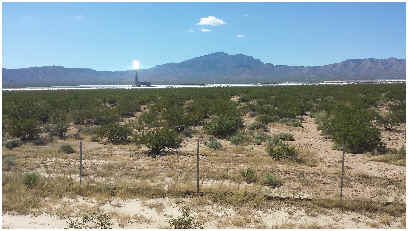
|
Concentrated
Solar Thermal Solar
Power Plant Developers
Concentrating
Solar Thermal & Concentrating Solar Power
We are Interested in Developing Solar Power
Parks in: Strategic
Partners including Landowners & Investors info@RenewableEnergyInvestments.com
Landowners: Your property must be at least 10 acres in size in urban areas/load centers - 300 acres in size in rural areas, and both locations must have transmission/power lines on your property or nearby. Call/email for more information Tel. (832) 758 - 0027 |
Concentrated
Solar Thermal
www.ConcentratedSolarThermal.com
Concentrated
Solar Power Project Development, Engineering, Procurement,
Construction,
Feasibility Studies and Consulting Services by
Renewable Energy Ventures
Tel. (832)
758
- 0027 Email: info@ConcentratedSolarThermal.com
Concentrated Solar
Thermal
www.ConcentratedSolarThermal.com
We provide Concentrated Solar Thermal and Concentrating Solar Power:
Project Development
Engineering
Feasibility Studies
Legal
Finance/Funding/Investments
Power Purchase Agreements
Interconnection Agreements
for our clients interested in Concentrated Solar Thermal and Concentrating Solar Power plants.
Our work is performed on a strict adherence to "vendor-neutrality." We seek to maximize the return on investment from both the economic and environmental aspects while simultaneously minimizing the operational expenses for our clients.
What is Concentrating Solar Power?
Concentrating solar power plants produce electric power by converting the sun's energy into high-temperature heat using various mirror configurations. The heat is then channeled through a conventional generator. The plants consist of two parts: one that collects solar energy and converts it to heat, and another that converts heat energy to electricity.
Concentrating solar power systems can be sized for village power (10 kilowatts) or grid-connected applications (up to 100 megawatts). Some systems use thermal storage during cloudy periods or at night. Others can be combined with natural gas and the resulting hybrid power plants provide high-value, dispatchable power. These attributes, along with world record solar-to-electric conversion efficiencies, make concentrating solar power an attractive renewable energy option in the Southwest and other sunbelt regions worldwide.
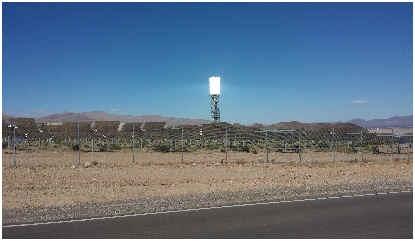
Renewable Energy Ventures - providing renewable energy project development expertise in the following solar energy technologies:
Carbon Free Energy
Clean Power Generation
Concentrated Solar Thermal
Concentrating Photovoltaic
Concentrating Solar Power
High Concentration PV
Molten Salt Storage
Parabolic Troughs
Pollution Free Power
Solar Cogeneration
Solar Dish Engines
Solar Power Towers
Solar Steam Generation
Solar Trigeneration
Thin Film Photovoltaics
And the Efficient Transmission of Power Through "Transmission
Superhighways"
and "High Voltage Direct Current" transmission lines and the "Unified National Smart
Grid"
Engineering, Feasibility Studies & Consulting Services Provided by In-house Engineers and Consultants or Through the Renewable Energy Institute
Please
direct inquiries to:
Tel. (832) 758 - 0027
Email: info@ConcentratedSolarThermal.com
All
the Electricity the World Needs
With Zero Greenhouse
Gas Emissions
from Concentrating
Solar Power Plants
Using a Very Small Part of the Desert
In
the map below, the larger red square on the left shows an area of hot desert
that, if covered with concentrating
solar power plants, would produce as much electricity as the world currently
uses. The smaller square shows a corresponding area for providing all of the
power needed by the European Union.
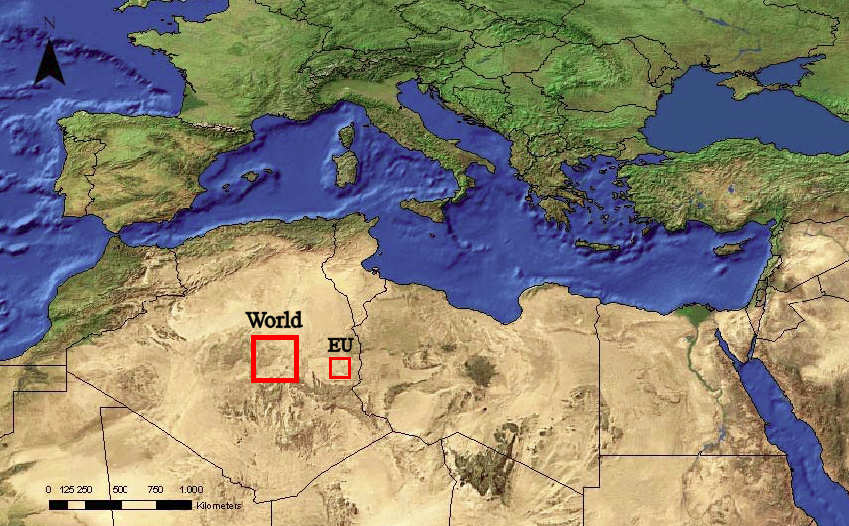
The map and information above courtesy of www.Desertec.org
|
This solar thermal power plant located in the
This solar
dish engine
is an electric generator that "burns"
sunlight instead of gas or coal to produce electricity. The solar
dish engine
(above) is a solar "concentrator" and is the primary solar component of the
system. The ssolar
dish engine
collects sunlight and
concentrates the sunlight on a small area. A thermal receiver absorbs the
concentrated beam of solar energy, converts it to heat, and
transfers the heat to the engine/generator. The
U.S. Department of Energy (DOE) is actively involved in the
research of concentrating solar power
(CSP). This research and development (R&D) focuses on
three types of concentrating solar power
technologies: parabolic trough systems, solar
dish engine systems, and power
towers. These technologies are used in concentrating solar power
plants that use different kinds of mirror configurations to
convert the sun's energy into high-temperature heat. The heat
energy is then used to generate electricity in a steam generator. Concentrating
solar power plant's relatively low cost and ability to deliver
power during periods of peak demand - when and where we need
it - means that concentrating solar power can be a major
contributor to the nation's future needs for distributed sources
of "carbon free energy" and "pollution free
power." DOE's
Solar Energy Technologies Program works in concentrating solar
power R&D to provide clean, reliable, affordable solar
thermal electricity for the nation. The program's goal is to
ensure that solar thermal technologies like concentrating solar
power make an important contribution to the world's growing need
for "carbon free energy" and "pollution free
power." |
Technology
Overview
Concentrating
solar power plants produce electric power by converting the sun's energy
into high-temperature heat using various mirror configurations. The heat
is then channeled through a conventional generator. The plants consist
of two parts: one that collects solar energy and converts it to heat,
and another that converts heat energy to electricity.
Concentrating solar power systems can be sized for village power (10 kilowatts) or grid-connected applications (up to 100 megawatts). Some systems use thermal storage during cloudy periods or at night. Others can be combined with natural gas and the resulting hybrid power plants provide high-value, dispatchable power. These attributes, along with world record solar-to-electric conversion efficiencies, make concentrating solar power an attractive renewable energy option in the Southwest and other sunbelt regions worldwide.
The
Solar Resource
The solar
resource for generating power from concentrating solar power systems is
plentiful. For instance, enough electric power for the entire country
could be generated by covering about 9 percent of Nevada—a plot of
land 100 miles on a side—with parabolic trough systems.
|
|
|
The solar resources for generating power from concentrating solar power systems is plentiful. For instance, enough electric power for the entire country could be generated by covering about 9 percent of Nevada – a plot of land 100 miles on a side – with parabolic trough systems. |
The amount of power generated by a concentrating solar power plant depends on the amount of direct sunlight. Like concentrating photovoltaic concentrators, these technologies use only direct-beam sunlight, rather than diffuse solar radiation.
The southwestern United States potentially offers the best development opportunity for concentrating solar power technologies in the world. There is a strong correlation between electric power demand and the solar resource due largely to air conditioning loads in the region. In fact, the Solar Electric Generating System plants operate for nearly 100% of the on-peak hours of Southern California Edison.
How
Does It Work?
There are
three kinds of concentrating solar power systems—troughs,
dish/engines, and power towers—that are classified by how they collect
solar energy.
Parabolic
Trough
systems:
The sun's energy is concentrated by parabolic (curved) trough-shaped
reflectors onto a receiver pipe running along the inside of the curved
surface. This energy heats an oil that flows through the pipe. The heat
energy is then pumped to a location where the heat energy is converted
to steam and the stem then generates electricity through one or more
steam turbines.
A collector field comprises many troughs in parallel rows aligned on a north-south axis. This configuration enables the single-axis troughs to track the sun from east to west during the day to ensure that the sun is continuously focused on the receiver pipes. Individual trough systems currently can generate about 80 megawatts of electricity.
Trough designs can incorporate thermal storage - setting aside the heat transfer fluid in its hot phase - allowing for electricity generation several hours into the evening. Currently, all parabolic trough plants are "hybrids," meaning they use fossil fuel to supplement the solar output during periods of low solar radiation. Typically a natural gas-fired heat or a gas steam boiler/reheater is used; troughs also can be integrated with existing coal-fired plants.
Solar
Power Tower systems:
What is a Solar Power Tower and How Does it Work?
A power tower converts sunshine into clean electricity for the world’s
electricity grids. The technology utilizes many large, sun-tracking
mirrors (heliostats) to focus sunlight on a receiver at the top of a
tower. A heat transfer fluid heated in the receiver is used to generate
steam, which, in turn, is used in a conventional turbine-generator to
produce electricity. Early power towers (such as the Solar One plant)
utilized steam as the heat transfer fluid; current designs (including
Solar Two, pictured) utilize molten nitrate salt because of its superior
heat transfer and energy storage capabilities. Individual commercial
plants will be sized to produce anywhere from 50 to 200 MW of
electricity.
Solar power towers offer large-scale, distributed solutions to our
nation’s energy needs, particularly for peaking power. Like all solar
technologies, they are fueled by sunshine and do not release greenhouse
gases. They are unique among solar electric technologies in their
ability to efficiently store solar energy and dispatch electricity to
the grid when needed — even at night or during cloudy weather. A
single 100-megawatt power tower with 12 hours of storage needs only 1000
acres of otherwise non-productive land to supply enough electricity for
50,000 homes. Throughout the sunny Southwest, millions of acres are
available with solar resources that could easily produce solar power at
the scale of hydropower in the Northwest U. S.
What is the Status of Power Tower Technology?
Power towers enjoy the benefits of two successful, large-scale
demonstration plants. The 10-MW Solar One plant near Barstow, CA,
demonstrated the viability of power towers, producing over 38 million
kilowatt-hours of electricity during its operation from 1982 to 1988.
The Solar Two plant was a retrofit of Solar One to demonstrate the
advantages of molten salt for heat transfer and thermal storage.
Utilizing its highly efficient molten-salt energy storage system, Solar
Two successfully demonstrated efficient collection of solar energy and
dispatch of electricity, including the ability to routinely produce
electricity during cloudy weather and at night. In one demonstration, it
delivered power to the grid 24 hours per day for nearly 7 straight days
before cloudy weather interrupted operation.
The successful conclusion of Solar Two sparked worldwide interest in
power towers. As Solar Two completed operations, an international
consortium, led by the U. S. (with
technical support from Sandia National Laboratories), formed to pursue
power tower plants worldwide, especially in Spain (where special solar
premiums make the technology cost-effective), but also in Egypt,
Morocco, and Italy. Their first commercial power tower plant is planned
to be four times the size of Solar Two (about 40 MW equivalent,
utilizing storage to power a 15MW turbine up to 24 hours per day).
This industry is also actively pursuing opportunities to build a similar
plant in our desert Southwest, where a 30 to 50 MW plant would take
advantage of the Spanish design and production capacity to reduce costs,
while providing much needed peaking capacity for the Western grid. The
first such plant would cost in the range of $100M and produce power for
about 15¢/kWh. While still somewhat higher in cost than conventional
technologies in the peaking market, the cost differential could be made
up with modest green power subsidies and political support,
jump-starting this technology on a path to 7¢/kWh power with the
economies of scale and engineering improvements of the first few plants.
It would, at that point, provide clean power as economically as more
conventional technologies.
|
|
|
The Solar Dish Engine project will evaluate the performance of the “critical” parts of the Stirling engine and develop the next-generation of the 25 kW Solar Dish Engine System. |
Solar
Dish Engine
What
is a Solar Dish-Engine System?
A Solar Dish-Engine System is an electric generator that “burns”
sunlight instead of gas or coal to produce electricity. The major parts
of a system are the solar concentrator and the power conversion unit.
Descriptions of these subsystems and how they operate are presented
below.
The dish, which is more specifically referred to as a concentrator, is the primary solar component of the system. It collects the solar energy coming directly from the sun (the solar energy that causes you to cast a shadow) and concentrates or focuses it on a small area. The resultant solar beam has all of the power of the sunlight hitting the dish but is concentrated in a small area so that it can be more efficiently used. Glass mirrors reflect ~92% of the sunlight that hits them, are relatively inexpensive, can be cleaned, and last a long time in the outdoor environment, making them an excellent choice for the reflective surface of a solar concentrator. The dish structure must track the sun continuously to reflect the beam into the thermal receiver.
The power conversion unit includes the thermal receiver and the engine/generator. The thermal receiver is the interface between the dish and the engine/generator. It absorbs the concentrated beam of solar energy, converts it to heat, and transfers the heat to the engine/generator. A thermal receiver can be a bank of tubes with a cooling fluid, usually hydrogen or helium, which is the heat transfer medium and also the working fluid for an engine. Alternate thermal receivers are heat pipes wherein the boiling and condensing of an intermediate fluid is used to transfer the heat to the engine.
|
|
|
This Science Application International Corporation/STM Power Inc. 25 kW Dish-Stirling System is operating at a Salt River Project site in Phoenix, AZ. |
The engine/generator system is the subsystem that takes the heat from the thermal receiver and uses it to produce electricity. The most common type of heat engine used in dish-engine systems is the Stirling engine. A Stirling engine uses heat provided from an external source (like the sun) to move pistons and make mechanical power, similar to the internal combustion engine in your car. The mechanical work, in the form of the rotation of the engine’s crankshaft, is used to drive a generator and produce electrical power.
In addition to the Stirling engine, microturbines and concentrating photovoltaics are also being evaluated as possible future power conversion unit technologies. Microturbines are currently being manufactured for distributed generation systems and could potentially be used in dish-engine systems. These engines, which are similar to (but much smaller than) jet engines, would also be used to drive an electrical generator. A photovoltaic conversion system is not actually an engine, but a semi-conductor array, in which the sunlight is directly converted into electricity.
|
|
|
Small photovoltaic solar dish conversion system. |
What
are the markets for Solar Dish-Engine Systems?
Solar dish-engine systems are being developed for use in emerging global
markets for distributed generation, green power, remote power, and
grid-connected applications. Individual units, ranging in size from 9 to
25 kilowatts, can operate independent of power grids in remote sunny
locations to pump water or to provide electricity for people living in
remote areas. Largely because of their high efficiency and
“conventional” construction, the cost of dish-engine systems is
expected to compete in distributed markets.
|
|
|
The Advanced Dish Development System is a 10 kW water pumping system. |
Opportunities are emerging for the deployment of dish-engine systems in the Southwest U.S. Many states are adopting green power requirements in the form of “portfolio standards” and renewable energy mandates. While the potential markets in the U.S. are large, the size of developing worldwide markets is immense. The International Energy Agency projects an increased demand for electrical power worldwide more than doubling installed capacity. More than half of this is in developing countries and a large part is in areas with good solar resources, limited fossil fuel supplies, and no power distribution network. The potential payoff for dish-engine system developers is the opening of these immense global markets for the export of power generation systems.
|
|
|
Experience gained with Solar Two has established a foundation which will lead to the first commercial Concentrating Photovoltaic Power Plant |
Business
and Market Opportunities
With one of the best direct normal insolation resources anywhere on
earth, the southwestern states are poised to reap large and as yet
largely uncaptured economic benefits from this important natural
resource. California, Nevada, Arizona, and New Mexico are each exploring
policies that will nurture the development of their solar-based
industries.
In addition to the concentrating solar power projects under way in this country, a number of projects are being developed in India, Egypt, Morocco, and Mexico. In addition, independent power producers are in the early stages of design and development for potential parabolic trough power projects in Greece (Crete) and Spain. Given successful deployment of one or more of these initial markets, additional project opportunities are expected in these and other regions.
One key competitive advantage of concentrating solar energy systems is their close resemblance to most of the power plants operated by the nation's power industry. Concentrating solar power technologies utilize many of the same technologies and equipment used by conventional central station power plants, simply substituting the concentrated power of the sun for the combustion of fossil fuels to provide the energy for conversion into electricity. This "evolutionary" aspect—as distinguished from "revolutionary" or "disruptive"—results in easy integration into today's central station–based electric utility grid. It also makes concentrating solar power technologies the most cost-effective solar option for the production of large-scale electricity generation.
Analysts predict the opening of specialized niche markets in this country for the solar power industry over the next 5 to 10 years. The U.S. Department of Energy estimates that by 2005 there will be as much as 500 megawatts of concentrating solar power capacity installed worldwide.
What
Does It Cost?
Concentrating
solar power technologies currently offer the lowest-cost solar
electricity for large-scale power generation (10 megawatt-electric and
above). Current technologies cost $2–$3 per watt. This results in a
cost of solar power of 9¢–12¢ per kilowatt-hour. New innovative
hybrid systems that combine large concentrating solar power plants with
conventional natural gas combined cycle or coal plants can reduce costs
to $1.5 per watt and drive the cost of solar power to below 8¢ per
kilowatt hour.
Advancements in the technology and the use of low-cost thermal storage will allow future concentrating solar power plants to operate for more hours during the day and shift solar power generation to evening hours. Future advances are expected to allow solar power to be generated for 4¢–5¢ per kilowatt-hour in the next few decades.
_______________________________________________________________________
Amazing
Solar Fact!
Did you know
that the silicon
contained in only one ton of sand,
and used in manufacturing
solar photovoltaic
panels, could
produce as much electricity as burning 500,000 tons
of coal?
_______________________________________________________________________
How To Reduce Greenhouse Gas Emissions
You can easily and affordably reduce or eliminate your company's "carbon footprint."
Did you know that the United States Congress will be passing the S. 2191 "Cap and Trade" Law in 2009? Did you know that Supreme Court ruled in April (2008) that the EPA already has the authority to regulate Greenhouse Gas Emissions? Cap And Trade narrowly passed in the U.S. House of Representatives, and is now in the U.S. Senate, who has threatened to make even greater reductions of Greenhouse Gas Emissions in their final Bill of the Cap And Trade legislation.
Are you ready for these new regulations? We can help you get ready!
According to Monty Goodell, MBA, the Founder and Chairman of the Renewable Energy Institute, “Greenhouse Gas Emissions and Carbon Dioxide Emissions will be the world’s biggest commodity market and will probably soon be the world’s largest market, period." In fact, Mr. Goodell anticipates that Greenhouse Gas Emissions and Carbon Dioxide Emissions will become one of the fasting-growing commodities and markets ever.
Every day, leading companies are spending millions of dollars going "GREEN" and reducing their Greenhouse Gas Emissions.
The Greenhouse Gas Emissions and Carbon Dioxide Emissions Market Potential is staggering! According to a recent New York Times article, carbon trading is one of the “fastest-growing specialties in financial services.”
Already, Greenhouse Gas Emissions Trading and International Carbon Trading markets are worth in excess of $50 billion/year. The United Nations expects this market to be valued in excess of $2 Trillion/year by 2012 and others are saying this could easily exceed $5 Trillion/year within the next several years!
DO THE MATH on the Carbon Dioxide Emissions market!
You may be wondering, how can such a relatively new commodity grow so rapidly? Here in the USA, 40 billion tons of Carbon Dioxide Emissions are produced every year. At the present price of $50 per ton of carbon dioxide, the Carbon Dioxide Emissions market is valued at $2.0 Trillion (40 billion tons of Carbon Dioxide Emissions x $50.00/ton).
How to Reduce Your Carbon Footprint
Carbon Emissions, Carbon Dioxide Emissions, and Greenhouse Gas Emissions can be reduced or completely eliminated with renewable energy technologies, such as our Solar Energy Systems - including our super high efficiency Solar Cogeneration and Solar Trigeneration energy systems. Brown buildings can be upgraded in to green buildings and "Net Zero Energy Buildings" through the products and services that we offer.
Qualified
commercial, government, industrial and municipal clients can affordably have one
of our Solar Cogeneration and Solar
Trigeneration energy systems installed, with ZERO up-front costs, with our Power
Purchase Agreement. Call (832) 758 - 0027 to learn more and find out
if your business qualifies.
_______________________________________________ Why We Need Renewable Energy,
and a Feed
In Tariff, NOW!
Monty Goodell, MBA, Founder and President of the Renewable Energy Institute, along with the Renewable Energy Institute's Scientific Advisory Board, which is comprised of several of our nation's leading experts, engineers, attorneys, professors and universities, is calling for our nation and all 50 states to adopt a Renewable Portfolio Standard (RPS) of at least 25% by 2025.
And even better than a Renewable Portfolio Standard, according to Mr. Goodell, is a "Feed In Tariff," which is the route Germany took, and why they have had such great success in their transition to a solar based economy. The fastest paths to jump-start the renewable energy industry, is through a "Feed In Tariff.
A Feed In Tariff is superior to a Renewable Portfolio Standard," according to Mr. Goodell. "For example, look at Germany's success in their transition to an economy based on the installation of solar energy systems, they adopted a Feed In Tariff, are further north from the Equator than we are here in the U.S., and they are placing solar panels on every rooftop and wind turbine generators throughout their country. They are leading the world in renewable energy technologies, primarily due to their early adoption of a Feed In Tariff"
What is a Feed In Tariff?
A Feed
In Tariff is a utility rate that is established by a state or federal
government, that requires a utility to pay higher electricity rates for green
electricity generated by the owners of the solar
energy systems, whether that is a homeowner or business owner. Feed
In Tariffs shifts the expenses of subsidizing green energy from taxpayers, to electricity ratepayers.
Feed In Tariffs also include guarantee
that the Feed In Tariffs' artificially
higher rates, will continue for periods as long as 25 years.
Germany's great success for jump-starting the solar energy industry there, first
established Feed In Tariffs in
1999. Germany now has about five times as many
solar photovoltaic panels installed as the United
States - even though their total combined installations of PV panels still
only account for about 0.5% of the electricity generated there.
"So, we go with a Feed In Tariff in lieu of a
Renewable Portfolio Standard.
Simultaneously, we need to start re-building our national
electric grid, and transforming it into 'Transmission
Superhighway' or 'Unified Smart
Grid' and dramatically
increase the nation's power supply as well as implement greater use of 'Energy
Efficiency Measures' - also referred to as Energy
Conservation Measures. And we need to implement "real" 'Demand Side Management' programs. Failure to
move in these areas and to do so immediately increases the risks to our country,
our national security and the climate" according to Mr. Goodell.
According to Mr. Goodell, our nation is at a crossroads and we have been 'over the Middle Eastern barrel of their fossil fuels' long enough. We must shift from energy dependence to energy independence and place significant emphasis and investments in our national energy security and lower greenhouse gas emissions.
Renewable energy, and only renewable energy provides the significant economic and environmental dividends our country now needs. Preferably, our fledgling renewable energy industry in the U.S., will be "jump-started" with a Feed In Tariff.
Some of the economic and environmental dividends that renewable energy will provide our country, include:
Creation of more than 3 million new jobs in the U.S..
Generate more than $1 trillion in economic impacts
Eliminates or Reduces Carbon Emissions and Greenhouse Gas Emissions
Significant reductions of oil imports
Reduce energy prices and save consumers as much as $50 billion on their energy bills
Elimination of billions of pounds of carbon dioxide emissions and other greenhouse gas emissions
Stimulate rural economies
Conserve natural gas supplies
Creates a clean, safe energy future
Position the US as a world leader in renewable energy technologies
According to the Energy Information Administration, the total US primary energy consumption is expected to increase from 100 quadrillion Btu (quads) in 2005 to 131 quads in 2030. However, the renewable electricity generation remains at 9% while use of coal increases 50 percent in 2030 to 57%. Ethanol use is expected to increase from 4 billion gallons in 2005 to 14.6 billion gallons in 2030, yet that is only about 8% of total gasoline consumption.
In January (2008) the National Climatic Data Center (NCDC) blamed the burning of fossil fuels as a key contributor to global warming and accelerating climate change. The NCDC warned that the rate of the warming is accelerating and that the rise in temperatures over the past 9 years is “unprecedented in the historical record." This was underscored in February (2008) in the consensus report by the Intergovernmental Panel on Climate Change that concluded with near certainty that human activity was the main contributor to global warming.
The renewable energy industry, single-handedly, provides a powerful argument and solutions for these
problems.Global warming and climate change are symptoms of a sick planet and the results of unrestrained "dumping" of huge amounts of pollution - in the form of carbon dioxide emissions and greenhouse gas emissions into the atmosphere.
The vast majority of carbon dioxide emissions and greenhouse gas emissions comes from "dirty" fossil fuels (coal, oil, and natural gas) used in making electricity at power plants and dirty fuels (gasoline and petroleum diesel) that run our internal combustion engines in our cars, trains, planes, and trucks. Our planet is home to millions and millions of internal combustion engines that run on dirty fossil fuels - whether they are fueled with gasoline for running our cars and lawnmowers or running on diesel fuel in the engines of trucks and ships like the very large crude carriers that transport the crude oil all around the world...... every internal combustion engine that is running on dirty fossil fuels is dumping millions and millions of tons of carbon dioxide emissions and greenhouse gas emissions into our atmosphere - which is aggravating and exacerbating our sick planet - and making manmade climate change and global warming more difficult to resolve through manmade remedies and solutions.
________________________________________________________________
"Transmission
Superhighway"
According to Monty Goodell, MBA, the Chairman and Founder of the Renewable Energy Institute, "our country desperately needs to upgrade its' national electric grid. The grid of today is a relic from the past, that is inefficient and costly. Originally built in the 1930's, it is costing our nation approximately $120 billion every year due to its' outdated and out-lived existence. The national power grid as designed and built in the 1930's does not have the efficiencies and capabilities to keep pace with the national power grid's demands of today."
"What we need" according to Mr. Goodell, is what former Vice President Al Gore calls a "Unified Smart Grid" or what we prefer to call a "Transmission Superhighway."
A Transmission
Superhighway would be buried underground and "wheels" or transmits
the renewable power ("green electricity") from the wind farms of the
midwest, and solar farms of the southwest, and geothermal farms of the west, to
load centers throughout every corner of the U.S."
According to many estimates, the "Unified
Smart Grid" or "Transmission
Superhighway" could be built for about $400 billion. Through its'
increased efficiencies, savings and reliability improvements that it will
provide, the nation's new "unified smart grid" will be paid in full,
in less than 4 years.
__________________________________________________________________
Carbon Dioxide Emissions
Since the year 1750
| ## |
| World CO2 since 1750 (cubic feet) |
World Carbon Dioxide Emissions since 1750 (cubic feet)
The
carbon clock tracks total carbon dioxide emissions in metric tons since 1750.
Since 1750, humans have emitted over 5 trillion pounds of carbon dioxide into
the atmosphere. Roughly half of this has ended up in the oceans where it is
beginning to damage the coral reefs. The other half is still in the atmosphere
and causing global warming. Each pound of CO2 takes up as much space as a 500
pound person.
The formula (which should be good for a year or two) is:
C(t) = 2.58 ×10¹² + 1240×t, where t is seconds since the start of 2007.
C is tonnes (metric tons) of carbon dioxide emissions.
2205 x C gives pounds of carbon dioxide emissions.
That comes to over 43 billion tons/year or over 86 trillion pounds/year.
Carbon dioxide (2) = 1 carbon atom with 2 oxygen atoms.
Carbon has relative weight 12 and Oxygen 16.
So it takes only 12 pounds of carbon to make 12+16+16 = 44 pounds of CO2.
___________________________________________________________________
Greenhouse Gas
Emissions Linked to
the Loss of a "Few" Polar Bears

Photo courtesy of Alaska Image Library. U.S. Fish and Wildlife Service
______________________________________________________________
“spending hundreds and hundreds and hundreds of billions of dollars every year for oil, much of it from the Middle East, is just about the single stupidest thing that modern society could possibly do. It’s very difficult to think of anything more idiotic then that.” R. James Woolsey, Jr., former Director of the CIA
|
Price of Addiction ### to Foreign Oil |
About the Renewable Energy Institute,
Climate Science,
Tax-payer Subsidies for Fossil Fuel & Nuclear Industries,
Peak Oil
& America's Clear and Present
Danger
Monty Goodell, MBA
Founder and Chairman
Renewable Energy Institute
The Renewable Energy Institute (REI) does not take a stand in the debate on global warming, and if there is global warming, is it "anthropogenic" or is it caused by the sun, or the sun's normal cycles. Or, if there is " climate change," is it " global cooling" caused by the water vapor in the atmosphere?
At the Renewable Energy Institute, we are waiting for the "true" scientists who doing the real research, to provide us with the science and answers critically needed to formulate correct policy - and not the phony " scientists" who are following politically-motivated and profit-driven agendas of the United Nations and government leaders. These phony scientists are not interested in conducting real scientific research. Their very livelihoods are dependent on the government grants to fund their phony research that have pre-determined conclusions before and "research" is conducted.
Political-interference by governments, governmental agencies, and bureaucrats that hand out billions of tax-payers dollars to phony scientists to conduct "junk science" and research, expect the conclusions that supports anthropogenic global warming, or climate change.
When scientists conclude in their research that they find no evidence of anthropogenic climate change or global warming, they are summarily dismissed, and black-balled from their communities and colleagues, and never again receive funding or grants. Grants and funding by government bureaucrats with politically-driven agendas to "scientists" expecting their pre-determined results and conclusions supporting anthropogenic global warming must stop.
According to the International Energy Agency (IEA), in 2007
the solar industry received $198 million in subsidies.
the oil and natural gas industry collected $2.1 Billion in tax-payer subsidies.
the coal industry coal received $3.2 Billion in tax-payer subsidies.
And since 1960:
the nuclear industry has received nearly $70 billion in tax-payer incentives and tax-payer subsidies.
Taxpayers have bankrolled the oil and gas industry, and the coal industry for 100 years now, and the nuclear industry for 50 years, to keep these dirty fuels and energy "cheap." Take away the tax-payer incentives and tax dollars, and we believe the real cost of gasoline, would be similar to the gasoline cost in Europe - $7.00 - $8.00/gallon!
In the meantime, our U.S. Military is spending billions of tax-payer dollars each year protecting the Straits of Hormuz where much of the world's crude oil is produced and shipped through the straits' international shipping lanes. Each day, hundreds of "very large crude carriers" pass through the Straits of Hormuz carrying oil from OPEC and the Middle-East to the U.S. and many other countries.
Isn't it time we take some of the tax-payer dollars supporting the nuclear, coal and oil and gas industries, and start incentivizing clean, renewable energy technologies that don't pollute or harm the environment in any way? Isn't it time that America ends its reliance on non-sustainable energy sources and stop over $1 billion every day, to oil suppliers from foreign countries, and start putting this money in "solar on every rooftop?!?
Mercury Emissions from Coal Fired Power Plants Far More Harmful to the Planet and People than Greenhouse Gas Emissions
Regarding the harm being caused to our planet from energy use, far more harm is being done to the planet, as well as to people and plants and animals, particularly fish, from the mercury emissions from coal fired power plants than from the coal fired power plants' greenhouse gas emissions. We surmise that if any polar bears have died as a result of an environmental problem, it was more likely from the high levels of mercury in their food chain, than from greenhouse gas emissions.
The Renewable Energy Institute is supporting and advancing renewable energy technologies, as well as reducing and eliminating greenhouse gas emissions and the fossil-fuel problems related to America's oil addiction and ending our dependence on foreign oil. The renewable energy technologies we support are already deemed to be economic, viable and practical. Solutions such as Solar Trigeneration energy systems (see www.SolarTrigeneration.com for more information) for any kind of facility or building - office buildings, shopping centers, data centers, university campuses, etc.
Since 2003, a Solar Trigeneration energy system has been providing 100% of the power and energy for a 5,300 sq. ft. office building near downtown Los Angeles, and doing so without any connection to the electric grid, whether its 12 noon or 12 midnite!
The Renewable Energy Institute is also involved in research and advocacy of "Net Zero Energy" (see: www.NetZeroEnergy.com for more information) and "Net Zero Energy Buildings" (see: www.NetZeroEnergyBuildings.com for more information). Net Zero Energy Buildings generate as much (or more) energy than they use, and export their excess power to the grid, which we believe needs to be updated into a "Transmission Superhighway."
Climate Change, Global Warming or Global Cooling?
The past 10 years indicates the opposite of "global warming" has occurred - that the "Earths Fever" has and that global cooling has taken place.
Weather, on a daily basis, or even an annual basis, is not climate, and climate is not weather.
"Climate change" is always taking place, from one day to the next, and one week to the next, as well as one year to the next. The planet's climate is an ever-evolving, changing and dynamic process.
Again, researchers and scientists need to refrain from being political, and stay out of politics, and politicians need to stay out of the way of the scientists and researchers, and let them do their work. Politicians, government leaders and bureaucrats scientists need true and accurate data and climate research from scientists that do not have a political agenda.
In the meantime, as there may still be 30 years of research before there are conclusive answers concerning anthropogenic climate change, can we "risk" 30 years of our children and grand children's future, should there is a link between climate change and greenhouse gas emissions? Should we not err on the side of caution?
Hubbert's Peak Oil Predictions Now Proving True?
Marion King Hubbert was a geologist and scientist who worked at Shell Oil company's research lab in Houston, Texas. Hubbert made several important contributions to geology, geophysics and petroleum geology. Hubbert is most recognized for the "Hubbert Curve" and " Hubbert Peak Theory" which is now referred to as " Peak Oil.
Hubbert's life work determined that the world has a finite amount of petroleum that can be produced. (Similarly, there is a finite amount of coal.) Many scientists and engineers believe we have reached Hubbert's "peak oil" limit. Hubbert's espouses that when 50% of domestic crude oil production has been reached, that there will be such significant upward demand on prices of the limited supplies of oil production, that the U.S. economy will experience severe economic, social, and political turmoil.
Hubbert's Peak Oil predictions have proven to be true and this is validated as the U.S. in the early 1970's produced about 60% of its' oil demand and imported 40%. That equation has flipped since then, because our domestic oil production has been on the decline since 1970, so now, due to our declining domestic oil production, we have to import 60% of our oil supplies, to meet our country's oil/energy demands.
The Next Oil Shock Could be the "mother" of All Oil Shocks
How severe our economic calamity and next "oil shock" will depend upon a number of factors, including when this occurs, as well as the following:
1. the dependence of the individual country upon its own crude oil production to meet its energy needs and to subsidize consumer imports;
2. the rate of relative decline in crude oil production;
3. the degree of difficulty encountered in replacing missing energy inputs;
4.
the degree to which our country had prepared in advance for this inevitable geological
and economic calamity.
Examples of past "oil shocks" and the economic and political
calamities that followed:
United States: Our peak crude oil production of domestic oil occurred in
1970; the first "oil shock" and oil crisis followed in 1973 with the
Arab/OPEC Oil Embargo.
Iran: Their peak crude oil production occurred in 1974; They had their islamic revolution 1979 that overturned government and replaced it with radical islam.
Soviet
Union: Their peak crude oil production
was in 1989; what happened next?
Their country disintegrated and the collapse of the Soviet Union followed in 1991.
Indonesia: Their peak crude oil production was in 1991; their financial
and government crisis followed in 1997.
Iraq: Iraq's crude oil production was in 1989; they then invaded Kuwait (for their oil) in 1991.
Using Mr. Hubbert's predictions, that beginning around 2000 we would see peak (global) oil production, then, if the country's not weaning themselves off of their oil addiction, and had not begun making the switch to renewable energy, that the negative economic and political calamities would soon follow, including ever-increasing prices of energy that is from fossil fuels.
Now
is the time to begin weaning ourselves off of fossil fuels and making the
transition to and increasing the use of renewable energy. If
you don't believe in climate change, or global warming, GREAT! Join us in the
switch to renewable energy and a fossil-free economy!
America's "Clear and Present Danger"
America
Has INCREASED its' Dependence on Foreign
Sources of Energy by 50% Since 1973.
America
is even more "addicted" to foreign oil today, than we were in 1973 -
1974 when OPEC, Saudi Arabia and other suppliers from the Middle-East
stopped selling us their fossil fuels, and created a significant blow to our
economy.
According to the CIA Fact Book, Every Day, the U.S.:
PRODUCES:
7,460,000 bbls of oil (within its borders)
CONSUMES:
20,800,000 bbls of oil
This
Means that 65% of America's Energy Supplies are Now Imported from Suppliers
from Foreign Countries.
Simply put, about 65% of the gasoline in your car's gas tank, comes from a foreign country.
EVERY day, the U.S. must IMPORT over 13 million bbls of oil from foreign countries and foreign suppliers to meet demand.
At
$80/barrel of oil, this also means that $1,040,000,000.00 American Dollars leave
our country, EVERY DAY, to foreign countries/suppliers of our fossil fuels, to
pay for the energy we need.
That's
$1 Billion EVERY day leaving our economy, and going to support a foreign
country's economy.
Talk
about our foreign trade deficit..... nearly $400 Billion each year, leaves our
country to pay for our oil addiction and the energy we need. To be exact,
that's $379,600,000,000.00 American Dollars.
This is NOT acceptable.
America needs to quickly transition to Energy Independence.
Renewable Energy is the Only Way America Can Achieve Energy Independence.
Millions of new and sustainable American jobs would be created here at home, if we would end our addiction to foreign fossil fuels, and quickly transition to an economy based on renewable energy and renewable fuels, produced here in the U.S.A.
The good news is that today, America already has all of the Renewable Energy Resources and Renewable Energy Technologies needed to make American Energy Independence a reality.
According to Monty Goodell, Founder and Chairman of the Renewable Energy Institute, "our increased dependence and reliance on foreign energy supplies represents a Clear and Present Danger to our national security, our economy, and the lives and livelihood of every American. Energy - including the energy we use from imported fossil fuels, is the very "lifeblood" of the American economy as it is for every industrialized country. An economy dies without it's lifeblood of energy. This Clear and Present Danger we face is far more serious than the problems related to greenhouse gas emissions. And while greenhouse gas emissions are very serious issue, in the long-term, pales in comparison to America's vital national security interests and America's economic stability in the short term. For this reason alone, America needs to transition away from its addiction to foreign energy supplies. And America's abundant renewable energy resources such as the energy we receive from the sun, and renewable energy technologies such as concentrated solar power (CSP) plants - can supply 100% of America's power requirements with a concentrating solar power plant measuring 75 miles by 75 miles, located in the Southwest U.S. By generating America's power from concentrating solar power plants, America resolves its' short-term Clear and Present Danger as it relates to importing its energy from foreign countries, and the long-term problems relating to greenhouse gas emissions."
Continuing, Mr. Goodell states that "too many Americans have forgotten what happened to us in 1973, when the Arabs and OPEC brought the United States economy to a screeching halt during the OPEC Oil Embargo. This happened because they (mainly the country of Saudi Arabia) disagreed with our foreign policy and is the reason why they "turned off the tap" of our need for their oil supplies. When Saudi Arabia and OPEC stopped the vital flow of oil to our country in 1973, they caused an "oil shock" that severely and negatively impacted our economy.
Mr. Goodell's question for us to ponder is, "do these countries who sell us 60% of our daily energy requirements, like us and our foreign policy, or might they leverage our addiction to their fossil fuels, and turn off the tap to make us adjust or revise our foreign policy?? Like any addict, America's foreign policy may be held hostage to its addiction, and in this case, our addiction to foreign oil, may over-ride our national interests."
Have
American's forgotten the gas shortages and long lines at
their gas stations to get
gas during the Arab Oil Embargo of 1973?
"Apparently so." Mr. Goodell states that "in 1973, America was 'addicted' and 'over the barrel' of foreign oil to the amount of 40%. Forty percent of our energy 'needs' in 1973 came from countries - many of which didn't like us then, and I'm afraid, many of them still don't. The difference between 1973 and today - is that today we receive 50% MORE foreign oil now than we did in 1973. And now we know about the problems relating to greenhouse gas emissions that we didn't know then. America needs to change course, and change course now, in terms of its' energy supplies and how we keep America's economy strong, without the threat of being held hostage to a middle-east tyrant or regime, that could once again, turn on us, and turn off our supply of foreign oil."
Remember
????
"
Sadly," Monty Goodell continues, " most Americans have forgotten the long lines of people waiting in their cars
- lined up and waiting
for gasoline at their nearby gas station, with lines that were many blocks
long. And, after waiting 4-5 hours, many even waiting overnight in many places, to
finally take their turn to fill up their car with gasoline, only to find that
the gas station
had run out of gas."
"Let me Repeat.... That was 1973 when we imported 40% of our daily energy requirements in the form of crude oil from overseas, and from foreign countries - and many of these from countries that don't like us.
Today, over 35 years later, America has yet to learn the lesson. We cannot continue our reliance on energy from foreign countries that supply us with 60% of the crude oil that our refineries use as a feedstock for producing gasoline and diesel fuel for our cars and trucks comes from overseas.
America is "over the barrel" and it's not our barrel, but the barrels of oil that we are addicted by and owned by other countries. Why have we not learned the lessons we needed to learn in 1973 when we were cut-off from the vital energy supplies we need?
Countries like China, are growing rapidly, and have an insatiable need for crude oil. China, with their booming economy, is increasingly growing in its clout and control over international supplies of crude oil - whether they do this through their ability to buy as much oil as they need on a daily basis, or whether they simply but American drilling rigs, technology, and explore and produce oil and gas from their own fields. China, is buying large amounts of oil for their country, and causing upward pricing on declining supplies. What happens if Russia, with all of their oil and natural gas, along with China and Venezuela, with or without the help of OPEC, decided to NOT sell oil to us????
To be sure, greenhouse gas emissions are a problem, and to some, greenhouse gas emissions are also a Clear and Present Danger, but not to the extent that it presents an imminent Clear and Present Danger.
America's reliance for 60% of our energy "needs" coming from foreign suppliers is un-acceptable.
The "driver" to get America to begin reducing and eliminating fossil fuel use should be our nation's national security and the welfare and safety of its citizens. And this can all begin with developing and investing in our own renewable energy resources and renewable energy technologies, let's start by putting solar on every rooftop that has a clear and unobstructed view of the Southern sky. See www.RooftopPV.com or www.DistributedPV.com for more information. Let's create incentives begin with adopting a national "Feed In Tariff" as Germany did in 1990.
America,
we simply do NOT have the luxury of time on our hands. We need to end our
dependence and reliance on foreign fossil fuels, especially from countries that
don't like us! We need to rapidly begin expanding renewable energy
resources and renewable
energy technologies from our vast and abundant renewable energy resources,
such as; solar, solar energy systems, solar cogeneration, solar trigeneration,
"solar on every roof," waste to energy, waste to fuel, biomass
gasification, B100 Biodiesel, Biomethane, Synthesis Gas, geothermal, E100
Ethanol (from sugar cane and NOT from corn), and wind, where it makes economic
sense."
___________________________________________________________________________

Are
you doing your part to prevent Climate Change and End America's Reliance on
Foreign Energy?
Carbon
Dioxide Emissions
www.CarbonDioxideEmissions.com
Carbon Emissions
www.CarbonEmissions.com
Carbon Free Energy
www.CarbonFreeEnergy.com
Clean Power Generation
www.CleanPowerGeneration.com
Distributed
PV
www.DistributedPV.com
Distributed
Solar Generation
www.DistributedSolarGeneration.com
Greenhouse Gas Emissions
www.GreenhouseGasEmissions.com
Pollution
Free Power
www.PollutionFreePower.com
Rooftop
PV
www.RooftopPV.com
Our
solar energy systems and
Solar Power Parks will;
* forever change the way energy is generated and used.
* eliminate or greatly reduce our customer's electric demand charges and electric expenses.
* slow, stop and eventually reverse climate change by reducing and then
eliminating anthropogenic greenhouse
gas emissions - of which carbon
dioxide emissions makes up 80% of all greenhouse
gas emissions.
* reduce and eventually eliminate the use of coal and other fossil fuels.
*
reduce the need for inefficient and expensive central power plants owned by
utility companies.
* promote energy independence.
* end America's dependence on oil from OPEC and other countries in the Middle-East, Venezuela and end our need for importing natural gas from Russia.
____________________________________________________________________________________
We support the Renewable Energy
Institute by donating a portion of our profits to the Renewable
Energy Institute in their efforts to reduce fossil fuel use through
renewable energy and their goals to end pollution from Carbon
Dioxide Emissions and Greenhouse
Gas Emissions.
The Renewable
Energy Institute is "Changing The Way The
World Makes and Uses Energy by Providing Research & Development, Funding and Resources
That Create Pollution Free Power, Carbon Free Energy & Renewable Energy
Technologies

![]()
![]()
www.RenewableEnergyInstitute.org
Email: info(@)Renewable Energy Institute (.)org
The information contained on this site is
copyright protected and
cannot be
reproduced in any form or manner without our consent.
Concentrat
ed Solar Thermalemail: info@Concentrat
edSolarThermal.com
Renewable Energy Institute
© Copyright 2003 – 2010
All Rights Reserved